Mo
Jami Mo Diha Abhiyan (My land My homestead Campaign)
is a pro-people programme of Orissa Government. A Regional
Workshop on 'Mo Jami Mo Diha' (My land My Homestead)
was organised at Bhawanipatna on 6th & 7th December
2007 with active participation of different NGOs working
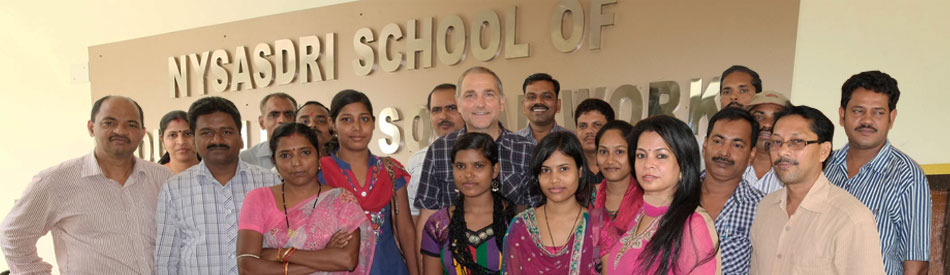
in the KBK districts of Orissa. More than 60 social
activists, social workers and intellectuals from Kalahandi,
Koraput, Balangir, Nuapada, Rayagada, Subarnapur, Nabarangpur
and Malkangiri districts were participated in this workshop.
The vital portion of the report follows -
KEY ISSUES EMERGED
• Mutation has been a major problem to assess
who is actually landless and homesteadless.
• Irregularity and corruption in ground level
is rampant.
• Constraint of getting proper information from
the revenue authorities.
• Discrepancies in land records and allotment
• Demarcation problem.
• A more proactive role of NGOs needed very urgently
to make the Campaign more successful.
• Influential peoples’ encroachment on public/
common land
• Inadequate people’s participation
The civil society organisation representatives were
divided in to 3 groups to discuss on 3 different themes
and present the recommendations on the plenary session.
Their recommendations are as follows -
Group - 1
What specific actions can NGOs take to make the Mo Jami
Mo Diha Campaign more successful?
• Awareness on objectives of MJMD campaign
• Conduction social map for identification of
landless families, women headed families, PWDs, orphans
– all eligible for land distribution
• Land records collection in collaboration with
Revenue Department and sharing of the same in Gram Sabha
and Palli Sabha
• Cadastral mapping – identification of
different land classifications on map drawn on a tracing
paper and using different colours for each classification
and identifying land for distribution to landless
• Sharing cadastral mapping and land records information
with PRI members at Panchayat level through local workshops
• Capacity building of NGO members on cadastral
mapping, legal literacy on land laws, MIS generation
on land analysis, etc
• Facilitation of land settlement camps thrice
a year in each RI Circle in collaboration with Revenue
Department and PR Institutions
• Formation of Village Inquiry Committees (VIC)
for monitoring of land transfers, rent receipt discrepancies,
demarcation problems, etc
• Case by case documentation of landholdings and
land dispute cases and uploading on website
• NGOs can use services of retired RIs/ Amins
or any Revenue officials for support in MJMD campaign
• Specific efforts for land rights to widows,
single women, destitute, orphans, PWDs under MJMD
• Interface workshop between Government, PRIs,
Community Organisations and NGOs on MJMD – sharing
of pending issues
• Documentation of positive case studies, development
of people-friendly IEC and their large scale dissemination
for replication
• Joint survey and settlement exercises by Revenue
Department and local NGOs
• Facilitation of TDR court, Sub-Collector court,
Fast Track court and Judicial courts for quick disposal
of long pending civil dispute cases on land
• Regular update of land records and uploading
on website – making it more user friendly too
• Formation of a joint action committee on MJMD
at Gram Panchayat, Block and District level for better
coordination and implementation of MJMD and also to
provide a space for dialogue and discussion between
GO-NGO
• Section 4 of RTI Act, 2005 to be used for easy
access of land records by facilitating NGOs
• Funding support for local NGOs for facilitating
MJMD campaign
Group - 2
What specific actions can the Panchayati Raj Institutions
take to make the Campaign more successful?
• Orientation of PRI members required
• Community Awareness could be easy by PRI members
• Proper Implementation of PESA Act is necessary
• Information collection and documentation through
PalliSabha
• Verification of application through special
GramSabha meant for Mo Jami Mo Diha
• PRIs should also be taught to measure land to
avoid discrepancies in actual area of possession
• PalliSabha and GramSabha should send resolution
to the Tahsildar on alloting land to the actually landless
and housesite to the homestead less families.
• Follow up action should be taken by Gram Panchayats
• People having less than one standard acre land
should be given patta over the land they have under
encroachment. A committee to look after the land issues
within Gram Panchayat would be formed.
• GP to collect all the information related to
land and should disseminate them in the villages coming
under its jurisdiction
• GP should make resolution barring the influential
people or landlord who still encroaching upon the common/public
land and leasable category of government land which
can be settled in the name of the poor landless and
homesteadless families.
• PRI would recommend strict legal action against
the person encroaching upon the private land of the
poor families.
• Village level to the Zilla Parishad level the
NGOs, CBOs, should be involved in the drive of facilitating
successful decision making process in the MJMD campaign.
• PRI would report illegal transfer of land under
regulation 2 of 1956 and OLR Act 1960 and to facilitate
for final restoration of the land by the revenue department.
Besides, regular monitoring of the possession for these
restored land with the actual owners.
• Gram Panchayat should disseminate the information
on number of tenants/ rayats, area of land and revenue
paid so that people can know that how much land who
has and how much revenue he/she is paying, in each village.
The information should be displayed in a board in the
village and GP head quarters. The total annual collection
should be shared with the people.
• PRIs should be present in the GramSabha along
with the Panchayat members. May be RIs should hold village
meeting before implementing MJMD
• PRIs to make resolution for settling the objectionable
category of govt land, where non-objectionable land
is not available, through de-reservation process if
the person is purely landless/ homesteadless.
• GramSabha would intimate resolutions to all
levels for speedy disposal of long pending cases.
Group - 3
What specific actions can the Department of Revenue
and Disaster Management take to make the campaign more
successful?
• MJMD timeframe has to be changed – convert
into a continuous campaign till resolution of all land
dispute cases and no landless – timeframes can
be fixed districtwise
• Recruit temporary or contractual staff for implementation
of MJMD, train all Revenue staff on MJMD campaign and
implementation
• Create local structures to make Revenue staff
accountable to the people and to the Government
• Processes should be immediately initiated for
fresh survey and settlement – looking at the complete
confusion in land settlement – keep provisions
in MJMD for fresh survey
• Easy accessibility and availability of land
records for people
• Issue of joint patta – use MJMD for facilitation
of joint pattas
• Eviction of encroachers on land settled in the
name of others – first evict encroachers and then
give patta to landless after fresh demarcation of that
land so there is no future dispute
• Strict and in principle implementation of decision
by Palli Sabha and Gram Sabha – in particular
tribal Panchayats under PESA – Palli Sabha and
Gram Sabha to identify landless and homesteadless families
for inclusion in MJMD campaign
• Ensure possession rights of and patta holders
who received land under Bhoodan Movement
• Fresh survey of irrigated lands in order to
stop collection of water tax from land holders whose
lands are not irrigated by any protective irrigation
structures of the Government
• Abolition of provision for lease land to landless
– instead settle the land in the name of possessor.
(You may request us for full version of the printed
report, which is 35 pages on A4 size and contains a
report of a Micro Study on Land issues in Orissa)
|